
How to Develop Critical Thinking Skills: A Practical Guide for Success
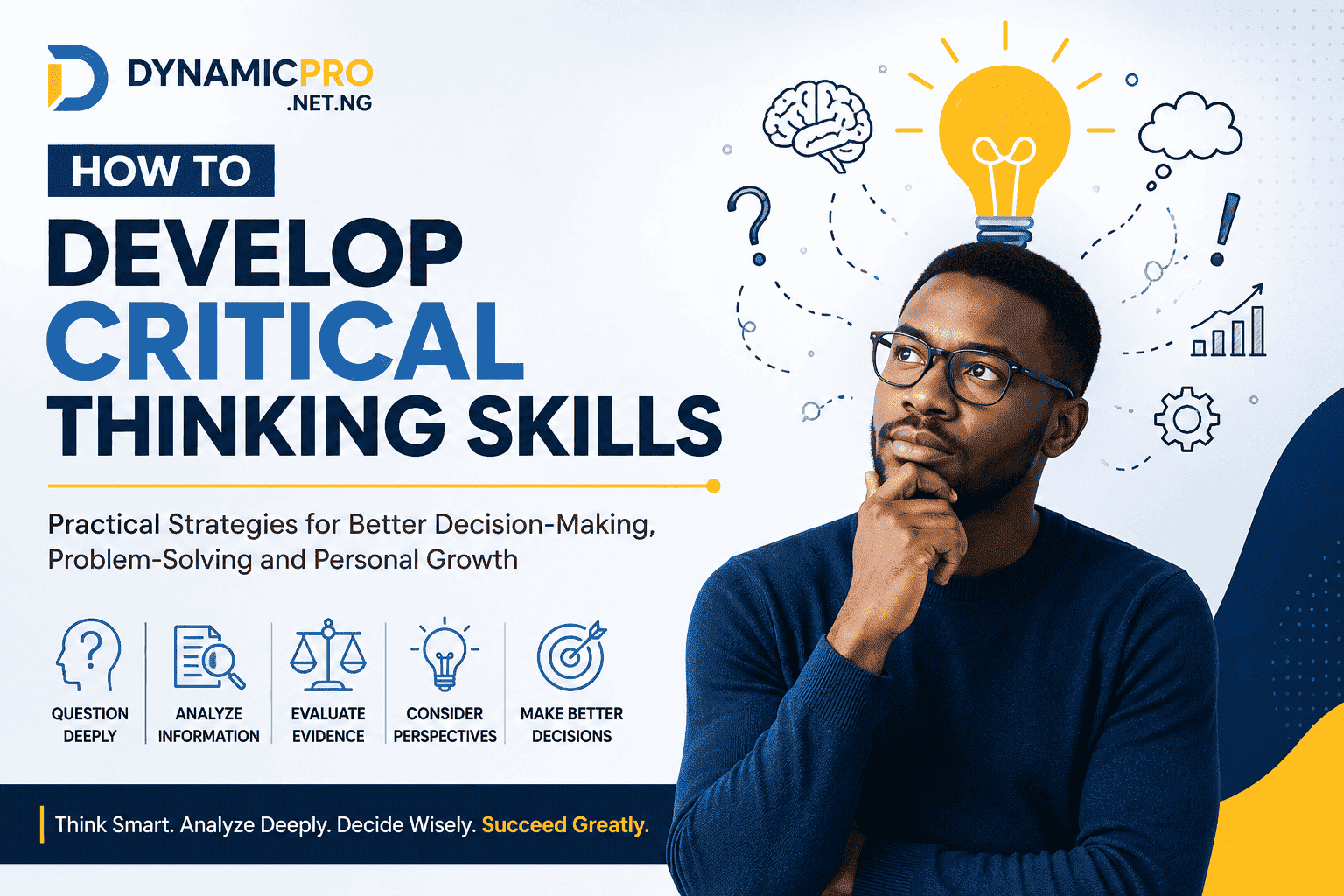
How to Develop Critical Thinking Skills: A Practical Guide for Everyday Success
Introduction
In today's fast-paced digital world, information is everywhere. Every day, we are exposed to news, opinions, advertisements, and social media content competing for our attention. While access to information has never been easier, distinguishing facts from misinformation can be challenging. This is where critical thinking becomes an essential life skill.
Critical thinking enables individuals to analyze information objectively, evaluate evidence, and make informed decisions. Whether you're a student, professional, entrepreneur, or lifelong learner, developing critical thinking skills can improve your problem-solving abilities and help you navigate complex situations more effectively.
In this guide, we'll explore what critical thinking is, why it matters, and practical ways to develop and strengthen this valuable skill.
What Is Critical Thinking?
Critical thinking is the ability to think clearly, rationally, and independently. It involves analyzing facts, questioning assumptions, evaluating evidence, and drawing logical conclusions.
Rather than accepting information at face value, critical thinkers ask questions such as:
- Is this information reliable?
- What evidence supports this claim?
- Are there alternative viewpoints?
- Could there be biases influencing this conclusion?
Critical thinking encourages thoughtful decision-making instead of impulsive reactions.
Why Are Critical Thinking Skills Important?
Developing critical thinking skills offers numerous benefits in both personal and professional life.
Better Decision-Making
Critical thinkers carefully assess available information before making decisions. This reduces the likelihood of mistakes and improves outcomes.
Improved Problem-Solving
Complex problems often require creative and logical solutions. Critical thinking helps individuals break down challenges into manageable parts and identify effective strategies.
Enhanced Communication
People with strong critical thinking skills can express ideas clearly, support arguments with evidence, and engage in productive discussions.
Increased Independence
Critical thinkers rely on evidence and reasoning rather than blindly following popular opinions or assumptions.
Career Advancement
Employers highly value employees who can analyze situations, solve problems, and make informed decisions. Critical thinking is among the most sought-after workplace skills.
Practical Ways to Develop Critical Thinking Skills
1. Ask Questions Regularly
One of the simplest ways to strengthen critical thinking is to develop a habit of questioning information.
Instead of immediately accepting a statement as true, ask:
- Who is providing this information?
- What evidence supports it?
- Is there another perspective?
Curiosity is the foundation of critical thinking.
2. Evaluate Information Sources
Not all information sources are equally reliable. Before trusting a claim, consider:
- The credibility of the author
- The reputation of the publication
- Whether evidence is provided
- Possible biases or conflicts of interest
Learning to assess sources critically can help you avoid misinformation.
3. Consider Multiple Perspectives
People often view situations through their own experiences and beliefs. To think critically, make an effort to understand different viewpoints.
Reading diverse opinions and engaging in respectful discussions can broaden your understanding and improve your reasoning skills.
4. Practice Active Listening
Critical thinking isn't only about speaking; it's also about listening.
When others share their ideas:
- Focus on understanding their argument
- Avoid interrupting
- Ask clarifying questions
- Evaluate the reasoning behind their conclusions
Active listening promotes deeper analysis and better communication.
5. Analyze Your Assumptions
Everyone has assumptions that influence how they interpret information.
Take time to reflect on your beliefs and ask yourself:
- Why do I think this way?
- What evidence supports my viewpoint?
- Could I be overlooking important information?
Self-awareness is a key component of critical thinking.
6. Strengthen Your Problem-Solving Skills
When faced with a problem:
- Clearly define the issue.
- Gather relevant information.
- Identify possible solutions.
- Evaluate the advantages and disadvantages of each option.
- Choose the best course of action.
This structured approach encourages logical and effective decision-making.
7. Read Widely and Continuously Learn
Reading books, articles, research papers, and educational resources exposes you to new ideas and perspectives.
The more knowledge you acquire, the better equipped you become to analyze information and make informed judgments.
8. Reflect on Your Decisions
After making important decisions, review the results.
Ask yourself:
- What worked well?
- What could have been improved?
- Did I consider all relevant information?
Reflection helps strengthen future decision-making skills.
9. Engage in Meaningful Discussions
Constructive conversations challenge your thinking and expose you to different viewpoints.
Participating in debates, discussion groups, or professional forums can improve your ability to evaluate arguments and communicate effectively.
10. Avoid Emotional Decision-Making
Emotions are a natural part of life, but they can sometimes cloud judgment.
Before making important decisions:
- Pause and reflect.
- Gather facts.
- Consider potential consequences.
- Evaluate options logically.
Balancing emotion with reason leads to more thoughtful outcomes.
Common Obstacles to Critical Thinking
Several factors can hinder critical thinking:
Confirmation Bias
People often seek information that supports their existing beliefs while ignoring contradictory evidence.
Overconfidence
Assuming you already know everything about a topic can prevent further learning and analysis.
Peer Pressure
Social influence can lead individuals to accept opinions without proper evaluation.
Emotional Reactions
Strong emotions may interfere with objective reasoning and decision-making.
Recognizing these obstacles is the first step toward overcoming them.
How Critical Thinking Benefits Everyday Life
Critical thinking extends beyond academics and professional settings. It can help you:
- Make smarter financial decisions
- Evaluate online information responsibly
- Solve personal challenges effectively
- Improve relationships through better communication
- Set realistic goals and achieve them successfully
The ability to think critically empowers individuals to navigate life's complexities with confidence and clarity.
Conclusion
Critical thinking is one of the most valuable skills you can develop in today's information-rich world. It enables you to analyze situations objectively, make informed decisions, solve problems effectively, and communicate with confidence.
By asking thoughtful questions, evaluating evidence, considering multiple perspectives, and continuously learning, you can strengthen your critical thinking abilities over time.
Remember, critical thinking is not a talent reserved for a select few—it's a skill that anyone can develop through consistent practice and intentional effort. The more you cultivate it, the better equipped you'll be to succeed in both your personal and professional life.
Start today by questioning assumptions, seeking reliable information, and approaching challenges with an open and analytical mind.

About the Author:
Femi Victor(Techland Dynamic) is an experienced EdTech consultant and web developer with over 10 years of experience in creating digital learning tools for Nigerian schools. He is passionate about simplifying complex educational data and helping students navigate the admission process.



Comments
No comments yet.