
How to Create Engaging Lesson Plans for Effective Teaching
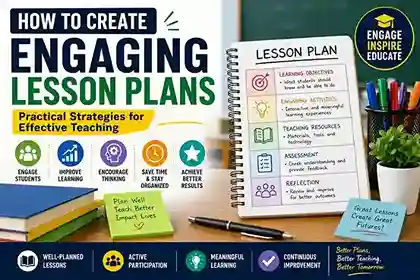
How to Create Engaging Lesson Plans That Improve Student Learning
Introduction
Every successful classroom begins with a well-prepared lesson plan. However, creating a lesson plan is more than simply outlining topics to teach. An effective lesson plan should capture students' attention, encourage participation, promote critical thinking, and help learners achieve specific educational objectives.
In today's classrooms, students are exposed to numerous distractions, making engagement more important than ever. Teachers who create engaging lesson plans often experience higher student participation, improved academic performance, better classroom management, and a more enjoyable teaching experience.
Whether you're a new teacher or an experienced educator looking to improve your teaching strategies, understanding how to design engaging lesson plans can significantly impact student success.
This guide explores practical strategies for creating lesson plans that inspire learning, encourage interaction, and make lessons memorable.
What Is a Lesson Plan?
A lesson plan is a detailed guide that outlines what a teacher intends to teach during a class session.
It typically includes:
- Learning objectives
- Teaching materials
- Classroom activities
- Assessment methods
- Time allocation
A lesson plan serves as a roadmap that helps teachers stay organized and ensures students achieve the intended learning outcomes.
Why Engaging Lesson Plans Matter
Engaging lesson plans do more than deliver information. They actively involve students in the learning process.
Benefits include:
Increased Student Participation
Students are more likely to contribute when lessons are interactive and relevant.
Better Knowledge Retention
Engaging activities help students remember information more effectively.
Improved Academic Performance
Students often perform better when they understand and enjoy the learning process.
Enhanced Critical Thinking
Interactive lessons encourage students to analyze, evaluate, and solve problems.
Better Classroom Management
Engaged students are less likely to become distracted or disruptive.
Know Your Students
Before creating a lesson plan, it is important to understand your learners.
Consider factors such as:
- Age group
- Learning styles
- Interests
- Academic abilities
- Cultural background
A lesson that works well for one group may not be effective for another.
For example, younger learners may respond better to games and storytelling, while older students may prefer discussions, case studies, and real-world applications.
Understanding your students allows you to tailor lessons to their needs and interests.
Start with Clear Learning Objectives
Every lesson should have a clear purpose.
Learning objectives define what students should know or be able to do by the end of the lesson.
Good objectives are:
- Specific
- Measurable
- Achievable
- Relevant
- Time-bound
For example:
Instead of writing:
"Students will understand fractions."
Write:
"Students will solve basic fraction addition problems accurately."
Clear objectives provide direction for both teachers and students.
Use a Strong Lesson Introduction
The first few minutes of a lesson often determine student engagement levels.
A strong introduction captures attention and creates curiosity.
Effective lesson starters include:
Asking Thought-Provoking Questions
Questions encourage students to think and participate immediately.
Using Real-Life Examples
Relating concepts to everyday experiences makes learning more meaningful.
Sharing Interesting Facts
Surprising information can spark curiosity.
Showing Images or Videos
Visual content often captures attention quickly.
Storytelling
Stories help students connect emotionally with lesson content.
An engaging introduction sets the tone for the entire lesson.
Incorporate Active Learning Strategies
Students learn best when they actively participate.
Active learning shifts students from passive listeners to active contributors.
Examples include:
Group Discussions
Students share ideas and learn from one another.
Problem-Solving Activities
Learners apply concepts to real situations.
Role-Playing
Students act out scenarios to deepen understanding.
Debates
Debates encourage critical thinking and communication skills.
Hands-On Activities
Practical experiences often improve learning retention.
The more involved students are, the more likely they are to remain engaged.
Use Technology Effectively
Technology can make lessons more interactive and appealing.
Examples include:
- Educational videos
- Interactive presentations
- Online quizzes
- Virtual simulations
- Educational apps
Technology should support learning objectives rather than distract from them.
When used appropriately, digital tools can enhance understanding and motivation.
Include Different Learning Styles
Students learn in different ways.
A highly engaging lesson addresses multiple learning preferences.
Visual Learners
Use:
- Charts
- Images
- Diagrams
- Videos
Auditory Learners
Use:
- Discussions
- Podcasts
- Lectures
- Audio recordings
Kinesthetic Learners
Use:
- Experiments
- Projects
- Physical activities
- Demonstrations
Including a variety of teaching methods helps reach more students.
Make Learning Relevant
Students are more engaged when they understand why a lesson matters.
Connect learning to:
- Real-world situations
- Career opportunities
- Current events
- Everyday experiences
For example, mathematics lessons can include budgeting examples, while science lessons can explore environmental issues affecting local communities.
Relevance increases student motivation and interest.
Encourage Collaboration
Collaborative learning promotes engagement and social interaction.
Group activities allow students to:
- Share ideas
- Solve problems together
- Learn from peers
- Develop communication skills
Examples include:
- Team projects
- Peer teaching
- Group presentations
- Collaborative research
Collaboration helps create a more dynamic classroom environment.
Ask Effective Questions
Questions are powerful teaching tools.
Rather than asking questions that require simple yes or no answers, encourage deeper thinking.
Examples include:
- Why do you think this happened?
- How would you solve this problem?
- What would happen if...?
- Can you explain your reasoning?
Open-ended questions stimulate discussion and critical thinking.
Incorporate Educational Games
Games can make learning enjoyable while reinforcing key concepts.
Examples include:
- Quiz competitions
- Word puzzles
- Learning challenges
- Classroom trivia
Gamification increases motivation and encourages participation.
Students often become more enthusiastic when learning feels fun.
Use Formative Assessments
Assessment should be part of the learning process, not just an end-of-topic activity.
Formative assessments help teachers monitor understanding throughout the lesson.
Examples include:
- Exit tickets
- Quick quizzes
- Class polls
- Student reflections
These activities provide valuable feedback and identify areas needing additional support.
Build Flexibility into Your Lesson Plan
Not every lesson unfolds exactly as planned.
Effective teachers remain flexible and adapt when necessary.
Students may:
- Need additional explanations
- Ask unexpected questions
- Complete activities faster or slower than expected
A flexible lesson plan allows adjustments without sacrificing learning objectives.
Create Smooth Transitions
Transitions between activities can influence student focus and behavior.
Effective transitions:
- Maintain momentum
- Reduce confusion
- Minimize disruptions
Examples include:
- Clear instructions
- Timers
- Visual cues
- Transition signals
Well-managed transitions keep students engaged throughout the lesson.
Encourage Student Ownership
Students become more invested in learning when they have a sense of ownership.
Ways to encourage ownership include:
- Allowing choices
- Encouraging goal setting
- Assigning leadership roles
- Supporting independent learning
Empowered students often demonstrate higher levels of motivation and responsibility.
End with a Strong Conclusion
The conclusion helps reinforce key learning points.
Effective lesson closures may include:
Summaries
Review important concepts.
Reflection Activities
Ask students what they learned.
Exit Questions
Assess understanding before students leave.
Previewing Future Lessons
Build anticipation for upcoming topics.
A strong ending helps students retain information and connect learning experiences.
Common Mistakes to Avoid
Overloading Content
Trying to cover too much information can overwhelm students.
Talking Too Much
Student participation should balance teacher instruction.
Ignoring Student Feedback
Pay attention to student responses and adjust accordingly.
Lack of Variety
Using the same teaching method repeatedly may reduce engagement.
Unclear Objectives
Students should understand the purpose of each lesson.
Avoiding these mistakes can improve lesson effectiveness significantly.
Tips for Continuous Improvement
Creating engaging lesson plans is an ongoing process.
Teachers can improve by:
- Reflecting on lessons
- Gathering student feedback
- Observing other educators
- Attending professional development workshops
- Experimenting with new strategies
Continuous improvement helps maintain enthusiasm and effectiveness in the classroom.
Conclusion
Creating engaging lesson plans is one of the most important responsibilities of a teacher. Effective lesson planning goes beyond organizing content—it involves designing learning experiences that capture attention, encourage participation, and promote meaningful understanding.
By understanding your students, setting clear objectives, using interactive teaching strategies, incorporating technology, and making learning relevant, you can create lessons that inspire curiosity and improve academic outcomes.
Remember, the most effective lesson plans are those that place students at the center of the learning process. When students are engaged, motivated, and actively involved, learning becomes more enjoyable, memorable, and successful.
Investing time in thoughtful lesson planning today can lead to better teaching experiences and greater student achievement tomorrow.

About the Author:
Femi Victor(Techland Dynamic) is an experienced EdTech consultant and web developer with over 10 years of experience in creating digital learning tools for Nigerian schools. He is passionate about simplifying complex educational data and helping students navigate the admission process.

Comments
No comments yet.