
How AI Is Changing Education
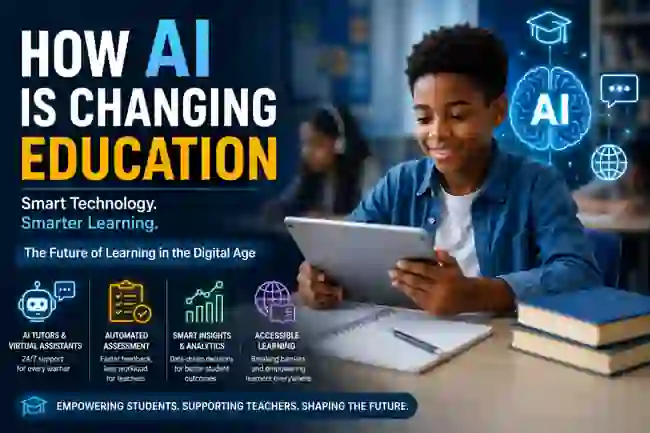
How AI Is Changing Education: The Future of Learning in the Digital Age
Introduction
Artificial Intelligence (AI) is no longer a futuristic concept confined to science fiction movies. Today, AI is transforming industries worldwide, and education is one of the sectors experiencing the most significant changes. From personalized learning experiences to automated administrative tasks, AI is reshaping how students learn, how teachers teach, and how educational institutions operate.
The rapid advancement of AI technologies has created opportunities to improve educational outcomes, increase accessibility, and enhance learning experiences for students of all ages. While AI presents exciting possibilities, it also raises important questions about ethics, privacy, and the future role of teachers in the classroom.
In this article, we'll explore how AI is changing education, its benefits, challenges, and what the future may hold for learners and educators alike.
Understanding Artificial Intelligence in Education
Artificial Intelligence refers to computer systems that can perform tasks that typically require human intelligence. These tasks include learning, reasoning, problem-solving, language understanding, and decision-making.
In education, AI-powered tools are designed to support learning, streamline teaching processes, and provide valuable insights into student performance.
Examples of AI applications in education include:
- Intelligent tutoring systems
- Personalized learning platforms
- Automated grading tools
- Virtual learning assistants
- Educational chatbots
- Predictive analytics
- Language learning applications
These technologies are helping educational institutions create more efficient and effective learning environments.
The Growing Role of AI in Modern Education
The integration of AI into education has accelerated significantly in recent years. Advances in machine learning, natural language processing, and data analytics have made AI tools more accessible and practical for schools, universities, and online learning platforms.
Educational institutions are increasingly adopting AI to address challenges such as:
- Large class sizes
- Diverse learning needs
- Administrative workloads
- Student engagement issues
- Accessibility barriers
As a result, AI is becoming an essential component of modern education systems.
Personalized Learning Experiences
One of the most significant ways AI is changing education is through personalized learning.
Traditional classrooms often require teachers to deliver the same lesson to students with different abilities, learning styles, and academic needs. This approach can make it difficult to meet every student's individual requirements.
AI-powered learning platforms analyze student performance, behavior, and progress to create customized learning experiences.
Benefits of Personalized Learning
Students can:
- Learn at their own pace
- Receive targeted support
- Focus on areas needing improvement
- Access customized educational content
For example, if a student struggles with mathematics, an AI system can identify weak areas and provide additional exercises, explanations, and practice opportunities.
This personalized approach helps improve learning outcomes and student confidence.
Intelligent Tutoring Systems
AI-powered tutoring systems are becoming increasingly popular in education.
Unlike traditional tutoring, these systems are available 24/7 and can provide immediate assistance whenever students need help.
Intelligent tutoring systems can:
- Answer student questions
- Provide explanations
- Offer practice exercises
- Track progress
- Adapt to individual learning styles
These tools act as virtual tutors, helping students reinforce classroom learning and improve academic performance.
Automated Grading and Assessment
Grading assignments and assessments can be time-consuming for educators, especially in large classrooms.
AI is helping automate many aspects of assessment and grading.
AI-powered systems can evaluate:
- Multiple-choice tests
- Short-answer questions
- Essays
- Quizzes
- Online assignments
Automated grading offers several advantages:
- Faster feedback
- Reduced teacher workload
- Increased consistency
- More time for instructional activities
Quick feedback allows students to identify mistakes and improve their understanding more effectively.
Enhancing Teacher Productivity
Contrary to fears that AI may replace teachers, most experts believe AI is designed to support educators rather than replace them.
Teachers perform many responsibilities beyond instruction, including:
- Lesson planning
- Grading
- Attendance tracking
- Student monitoring
- Administrative tasks
AI tools can automate repetitive tasks, allowing teachers to focus more on teaching, mentoring, and student engagement.
This increased efficiency can improve both teaching quality and job satisfaction.
Improving Student Engagement
Maintaining student engagement is one of the biggest challenges in education.
AI-powered educational technologies can make learning more interactive and engaging through:
- Gamification
- Adaptive learning systems
- Interactive simulations
- Virtual reality experiences
- Personalized recommendations
Students are often more motivated when learning feels relevant, enjoyable, and tailored to their needs.
AI helps create dynamic learning environments that encourage participation and curiosity.
AI-Powered Virtual Assistants
Virtual assistants are becoming common in educational settings.
These AI-driven tools can assist students by:
- Answering frequently asked questions
- Providing study reminders
- Explaining concepts
- Helping with scheduling
- Offering learning resources
Students can access support whenever they need it, improving learning continuity and reducing frustration.
Virtual assistants also help educational institutions provide better support services without increasing staffing requirements.
Supporting Students with Special Needs
AI is playing a vital role in improving educational accessibility.
Students with disabilities often face unique learning challenges. AI-powered tools can provide personalized support that enhances inclusion and learning opportunities.
Examples include:
Speech Recognition Technology
Helps students with physical disabilities interact with educational materials.
Text-to-Speech Software
Assists students with visual impairments or reading difficulties.
Real-Time Translation
Supports multilingual learners and students learning in non-native languages.
Adaptive Learning Systems
Adjust educational content based on individual needs and abilities.
These innovations make education more accessible and equitable.
Language Learning and AI
Language education has benefited greatly from AI technologies.
Many language-learning platforms use AI to:
- Analyze pronunciation
- Correct grammar mistakes
- Provide conversational practice
- Personalize lessons
Students receive instant feedback and can practice language skills at their own pace.
AI-powered language learning tools have made acquiring new languages more accessible than ever before.
Data-Driven Educational Insights
Educational institutions generate vast amounts of data.
AI can analyze this data to identify patterns and trends that help improve learning outcomes.
Examples include:
- Monitoring student progress
- Identifying at-risk students
- Predicting academic performance
- Evaluating teaching effectiveness
These insights allow educators to make informed decisions and provide targeted interventions before students fall behind.
Expanding Access to Education
AI is helping bridge educational gaps around the world.
Students in remote or underserved communities often face barriers such as:
- Limited access to qualified teachers
- Lack of educational resources
- Geographic isolation
AI-powered online learning platforms can provide high-quality educational content regardless of location.
This increased accessibility has the potential to reduce educational inequality and create new opportunities for learners worldwide.
AI and Online Learning
The growth of online learning has accelerated the adoption of AI technologies.
AI enhances online education by:
- Personalizing course recommendations
- Monitoring student engagement
- Providing automated support
- Adapting content based on performance
As online education continues to expand, AI will play an increasingly important role in creating effective virtual learning environments.
Challenges and Concerns
Despite its many benefits, AI in education also presents several challenges.
Data Privacy
AI systems often rely on large amounts of student data.
Educational institutions must ensure that personal information is collected, stored, and used responsibly.
Bias in AI Systems
AI systems can reflect biases present in the data used to train them.
Developers and educators must work to ensure fairness and inclusivity.
Technology Dependence
Excessive reliance on technology may reduce opportunities for human interaction and critical thinking.
Balance remains essential.
Access Inequality
Not all students have equal access to digital devices and internet connectivity.
Without proper infrastructure, some learners may be left behind.
Will AI Replace Teachers?
One of the most common concerns about AI in education is whether it will replace teachers.
The reality is that teaching involves far more than delivering information.
Teachers provide:
- Emotional support
- Mentorship
- Motivation
- Classroom management
- Social development guidance
AI can automate certain tasks and provide educational assistance, but it cannot replicate the empathy, creativity, and human connection that teachers bring to learning.
The future of education will likely involve collaboration between educators and AI technologies rather than replacement.
The Future of AI in Education
The role of AI in education is expected to expand significantly in the coming years.
Future developments may include:
- Highly personalized learning pathways
- Advanced virtual tutors
- Intelligent learning analytics
- Immersive educational experiences
- Improved accessibility tools
As technology evolves, AI has the potential to make education more effective, inclusive, and accessible for learners worldwide.
However, successful implementation will require careful consideration of ethics, privacy, and equity.
Best Practices for Using AI in Education
To maximize the benefits of AI, educators and institutions should:
- Prioritize student privacy
- Maintain human oversight
- Promote digital literacy
- Ensure equitable access
- Use AI as a supplement rather than a replacement for teaching
Balanced integration can help create positive educational experiences while minimizing risks.
Conclusion
Artificial Intelligence is transforming education in remarkable ways. From personalized learning and intelligent tutoring systems to automated grading and enhanced accessibility, AI is helping create more effective and inclusive learning environments.
While challenges such as privacy concerns and technology access must be addressed, the potential benefits of AI in education are significant. Rather than replacing teachers, AI serves as a powerful tool that supports educators and empowers students.
As educational institutions continue to embrace innovation, AI will play an increasingly important role in shaping the future of learning. Those who understand and adapt to these changes will be better prepared to thrive in an increasingly digital world.
The future of education is not simply about technology—it is about using technology wisely to create better opportunities for learners everywhere.

About the Author:
Femi Victor(Techland Dynamic) is an experienced EdTech consultant and web developer with over 10 years of experience in creating digital learning tools for Nigerian schools. He is passionate about simplifying complex educational data and helping students navigate the admission process.



Comments
No comments yet.