
Effective Classroom Management Strategies
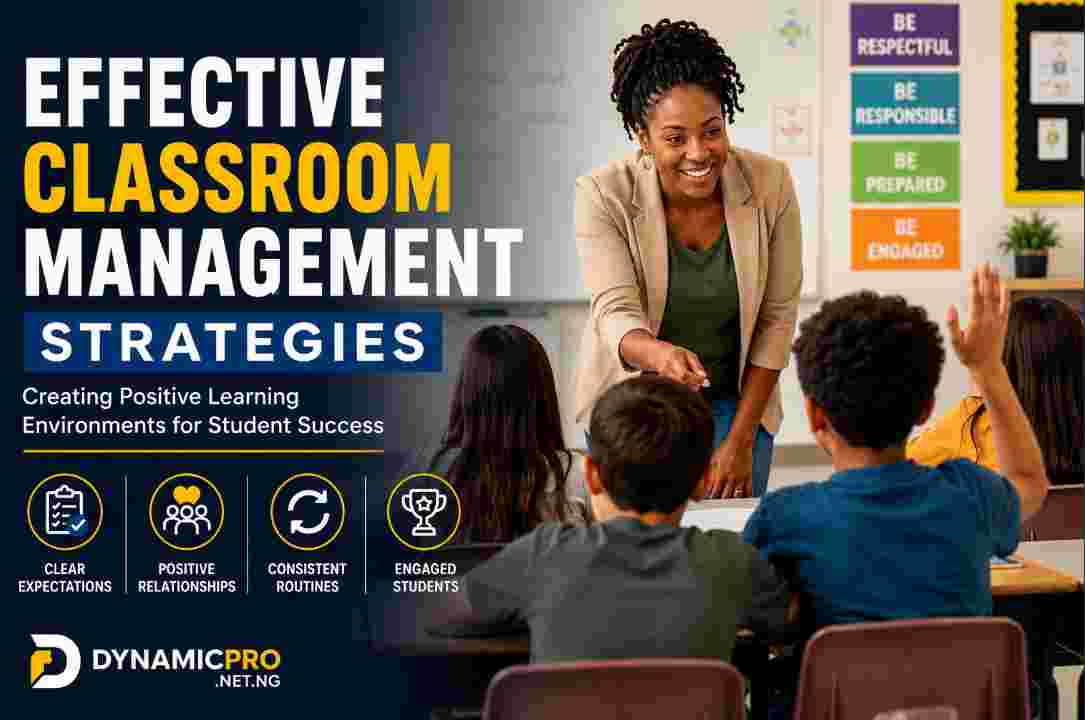
Effective Classroom Management Strategies: A Complete Guide for Teachers
Introduction
Classroom management is one of the most important aspects of successful teaching. No matter how knowledgeable a teacher is or how well-designed a lesson plan may be, learning becomes difficult when the classroom environment is disorganized, disruptive, or lacks clear expectations.
Effective classroom management goes beyond controlling student behavior. It involves creating a positive learning environment where students feel respected, motivated, engaged, and responsible for their actions. A well-managed classroom allows teachers to maximize instructional time while helping students develop self-discipline, cooperation, and academic confidence.
In today's educational landscape, teachers face various challenges, including diverse learning needs, technology distractions, behavioral issues, and varying levels of student motivation. As a result, mastering classroom management has become more important than ever.
This comprehensive guide explores practical classroom management strategies that can help teachers build productive learning environments and improve student outcomes.
What Is Classroom Management?
Classroom management refers to the techniques, strategies, and practices teachers use to maintain an organized, focused, and positive learning environment.
It includes:
- Establishing classroom rules
- Managing student behavior
- Encouraging participation
- Maintaining order
- Creating routines
- Promoting respect and responsibility
The ultimate goal is not simply to prevent disruptions but to create conditions that support effective teaching and learning.
Why Effective Classroom Management Matters
Strong classroom management benefits both teachers and students.
Improves Student Learning
When distractions are minimized, students can focus better on lessons and academic tasks.
Increases Student Engagement
A structured classroom encourages participation and active learning.
Reduces Stress
Both teachers and students experience less stress when expectations and routines are clear.
Builds Positive Relationships
Respectful classroom environments foster stronger teacher-student relationships.
Maximizes Instructional Time
Less time spent addressing behavioral issues means more time for learning.
1. Establish Clear Expectations from Day One
One of the most effective classroom management strategies is setting expectations early.
Students need to understand what behaviors are acceptable and what is expected of them.
Examples of classroom expectations include:
- Arrive on time.
- Respect others.
- Raise your hand before speaking.
- Complete assignments on time.
- Follow classroom procedures.
When expectations are communicated clearly, students are more likely to follow them consistently.
Tips for Success
- Keep rules simple and easy to understand.
- Involve students in creating classroom guidelines.
- Display rules where everyone can see them.
- Review expectations regularly.
2. Build Positive Relationships with Students
Students are more likely to cooperate when they feel valued and respected.
Building strong relationships helps create trust and improves classroom behavior.
Ways to build positive relationships include:
- Learning students' names quickly.
- Showing genuine interest in their lives.
- Listening actively.
- Celebrating achievements.
- Offering encouragement during challenges.
When students feel connected to their teacher, they are often more motivated to participate and behave appropriately.
3. Create Consistent Classroom Routines
Predictability helps students feel secure and reduces confusion.
Classroom routines establish structure and make transitions smoother.
Examples of effective routines include:
- Morning arrival procedures
- Homework submission processes
- Group activity guidelines
- End-of-class cleanup routines
Consistency helps students know what to expect and reduces opportunities for disruptive behavior.
4. Use Positive Reinforcement
Recognizing positive behavior is often more effective than constantly correcting negative behavior.
Positive reinforcement encourages students to repeat desirable actions.
Examples include:
- Verbal praise
- Certificates
- Classroom rewards
- Positive notes to parents
- Leadership opportunities
Students tend to respond positively when their efforts and achievements are acknowledged.
5. Maintain Consistency
Inconsistent enforcement of rules can create confusion and frustration.
If classroom expectations change frequently or consequences are applied unfairly, students may struggle to understand boundaries.
Effective teachers:
- Apply rules fairly.
- Follow through on consequences.
- Treat students consistently.
- Avoid favoritism.
Consistency helps establish trust and accountability.
6. Develop Engaging Lessons
Many behavioral problems stem from boredom or lack of engagement.
Students are less likely to become disruptive when they are actively involved in learning.
Strategies for increasing engagement include:
- Interactive discussions
- Educational games
- Group activities
- Hands-on projects
- Technology integration
- Real-world examples
Engaging lessons capture students' attention and make learning more enjoyable.
7. Use Effective Communication
Communication plays a critical role in classroom management.
Teachers should communicate clearly, respectfully, and confidently.
Best practices include:
- Giving concise instructions.
- Maintaining eye contact.
- Using positive language.
- Listening to student concerns.
- Providing constructive feedback.
Strong communication helps prevent misunderstandings and promotes cooperation.
8. Address Problems Early
Small behavioral issues can quickly become larger problems if ignored.
When teachers address concerns early, they can often prevent escalation.
Examples include:
- Speaking privately with a student.
- Clarifying expectations.
- Redirecting off-task behavior.
- Providing additional support when needed.
Early intervention often leads to better outcomes.
9. Encourage Student Responsibility
Students should be encouraged to take ownership of their actions and learning.
Ways to promote responsibility include:
- Assigning classroom jobs.
- Encouraging goal setting.
- Teaching self-monitoring skills.
- Allowing students to make choices.
Responsible students are more likely to contribute positively to the classroom environment.
10. Foster a Positive Classroom Culture
A positive classroom culture promotes respect, inclusion, and collaboration.
Students should feel safe expressing ideas without fear of ridicule or criticism.
Teachers can create a positive culture by:
- Encouraging kindness.
- Celebrating diversity.
- Promoting teamwork.
- Modeling respectful behavior.
A supportive environment enhances both academic and social development.
11. Use Non-Verbal Classroom Management Techniques
Not all classroom management requires verbal correction.
Non-verbal strategies can effectively redirect behavior without disrupting instruction.
Examples include:
- Eye contact
- Hand signals
- Moving closer to off-task students
- Visual reminders
- Classroom cues
These subtle techniques often reduce disruptions while maintaining lesson flow.
12. Differentiate Instruction
Students learn at different rates and in different ways.
When instruction does not meet students' needs, frustration and behavioral issues may arise.
Differentiated instruction involves:
- Adapting lessons to various learning styles
- Providing multiple ways to demonstrate understanding
- Offering additional support when necessary
Meeting diverse learning needs can improve both engagement and behavior.
13. Manage Transitions Effectively
Transitions between activities can be a common source of classroom disruption.
Effective transition strategies include:
- Providing advance warnings
- Using timers
- Giving clear instructions
- Establishing transition routines
Smooth transitions help maintain momentum and minimize downtime.
14. Collaborate with Parents
Parents play an important role in supporting classroom management.
Regular communication helps build partnerships that benefit students.
Teachers can:
- Share student progress.
- Discuss concerns early.
- Celebrate successes.
- Provide suggestions for support at home.
Strong teacher-parent collaboration often improves student behavior and academic performance.
15. Remain Calm During Challenges
Even experienced teachers encounter difficult situations.
Responding calmly helps prevent conflicts from escalating.
When managing challenging behavior:
- Stay professional.
- Avoid emotional reactions.
- Focus on solutions.
- Maintain respect.
A calm approach models emotional control and encourages students to do the same.
Common Classroom Management Mistakes to Avoid
Even well-intentioned teachers can make mistakes that affect classroom management.
Overly Strict Rules
Excessive restrictions can create resentment and reduce student motivation.
Inconsistent Consequences
Changing expectations frequently creates confusion.
Publicly Embarrassing Students
Correcting students publicly can damage relationships and self-esteem.
Ignoring Positive Behavior
Focusing only on negative behavior may discourage students who are doing the right thing.
Lack of Preparation
Poorly planned lessons often lead to disengagement and disruptions.
Avoiding these mistakes can strengthen classroom management efforts significantly.
The Role of Technology in Classroom Management
Technology can be both helpful and challenging in today's classrooms.
Effective uses include:
- Interactive learning platforms
- Digital classroom management tools
- Online assessments
- Educational videos
However, teachers should establish clear guidelines for technology use to prevent distractions.
Benefits of Effective Classroom Management
When classroom management is effective, everyone benefits.
For Students
- Improved academic performance
- Greater confidence
- Better social skills
- Increased engagement
For Teachers
- Reduced stress
- Improved job satisfaction
- Better classroom control
- More effective instruction
For Schools
- Improved learning outcomes
- Positive school culture
- Enhanced student success
Conclusion
Effective classroom management is the foundation of successful teaching and learning. By establishing clear expectations, building positive relationships, maintaining consistency, and creating engaging learning experiences, teachers can foster environments where students thrive academically and socially.
While every classroom presents unique challenges, implementing proven classroom management strategies can significantly improve behavior, engagement, and overall educational outcomes.
Remember, classroom management is not about controlling students—it is about creating an environment where learning can flourish. With patience, consistency, and intentional effort, teachers can build classrooms that inspire success, responsibility, and lifelong learning.

About the Author:
Femi Victor(Techland Dynamic) is an experienced EdTech consultant and web developer with over 10 years of experience in creating digital learning tools for Nigerian schools. He is passionate about simplifying complex educational data and helping students navigate the admission process.


Comments
No comments yet.